

Local anesthesia for lower blepharoplasty is commonly used during lower eyelid surgery to keep patients comfortable while the procedure is performed. Instead of using general anesthesia, the surgeon numbs the surgical site with a local anesthetic solution so the lower eyelid area becomes numb during treatment. This allows the surgeon to safely address concerns such as under-eye bags, dark circles, or sagging skin.
In many cases, lower blepharoplasty can be safely performed under local anesthesia in a surgery center. The goal is to maintain patient comfort while the surgeon carefully treats fat pads, removes excess skin, and refines the appearance of the lower lids. Dr. Rodriguez, a board-certified plastic surgeon at San Diego Plastic Surgery Center, evaluates each patient individually and recommends the most appropriate anesthesia approach based on their anatomy, medical history, and treatment goals. Understanding these options ahead of time often helps patients feel more prepared and confident when planning their procedure.
What Is Local Anesthesia for Lower Blepharoplasty?

Local anesthesia for lower blepharoplasty means numbing the eyelid area so the lower eyelid blepharoplasty can be completed while the patient remains awake. This technique is widely used in plastic surgery and ophthalmic plastic procedures because it targets the exact surgical site without affecting the rest of the body.
The local anesthetic is injected into the eyelid skin and nearby tissue. Within minutes, the area becomes numb, allowing the surgeon to continue the surgery comfortably. Even though the patient stays awake, most describe the experience as calm and manageable.
Sometimes a small amount of sedation is added so the patient relaxed during the cosmetic procedure.
How Local Anesthesia Works During Lower Eyelid Surgery
During lower eyelid surgery, the surgeon uses a local anesthesia injection that contains medications such as lidocaine and epinephrine. These medications block pain signals and help reduce bleeding in the surgical site.
The preparation process often includes:
- Applying topical anesthesia or numbing cream to the eyelid skin
- Delivering the local anesthesia injection with the local anesthetic solution
- Waiting several minutes for the area to become completely numb
Some practices also apply numbing cream first to minimize discomfort before the injection.
Once the medication is applied directly and working, the surgeon can safely adjust fat pads or remove extra skin from the lower eyelid.
Why Some Surgeons Prefer Local Anesthesia
Many oculoplastic surgeon specialists and plastic surgery providers prefer local anesthesia for lower blepharoplasty surgery when the situation allows.
There are several reasons:
- Reliable patient comfort
- Fewer systemic anesthesia risks
- Faster recovery
- More precise work on the surgical site
Because the patient is awake, the surgeon can sometimes evaluate the appearance of the lower lids during the procedure and make small adjustments.
Is Lower Blepharoplasty Commonly Performed With Local Anesthesia?
Yes, lower blepharoplasty is frequently performed under local anesthesia, especially when the goal is to treat excess eyelid skin, reposition fat pads, or smooth wrinkles beneath the eyes.
Still, anesthesia is not identical for every patient. The right approach depends on a few important factors, such as:
- Complexity of the surgery
- The patient’s medical history
- Whether additional tightening procedures are planned
- The surgeon’s technique and preference
Local Anesthesia vs General Anesthesia
There are two primary anesthesia options used in blepharoplasty.
Local anesthesia
- The patient stays awake
- The surgical site becomes numb
- Recovery is typically faster
- Less strain on the body compared to general anesthesia
General anesthesia
- The patient is fully asleep
- Often chosen for longer surgery
- Used when multiple procedures are performed together
For example, if lower blepharoplasty surgery is combined with a brow lift or laser resurfacing, the surgeon may recommend general anesthesia instead.
When IV Sedation May Also Be Used
Some clinics combine local anesthesia with iv sedation, sometimes called twilight anesthesia.
This option keeps the patient relaxed while the procedure is still performed under local anesthesia.
The benefits may include:
- Reduced anxiety
- Greater patient comfort
- Less awareness during surgery
For many patients, this balance makes the experience feel easier overall.
Benefits of Local Anesthesia for Lower Blepharoplasty
Choosing local anesthesia for lower blepharoplasty can offer several practical advantages when the procedure is straightforward.
Faster Recovery After Surgery
One noticeable benefit is the smoother recovery period.
Since the patient is not recovering from general anesthesia, the body usually rebounds more quickly. Most people can leave the surgery center shortly after the procedure and spend the first day resting at home.
Light activities often resume within a few days.
Reduced Anesthesia Risks
Another reason surgeons often recommend local anesthesia is the lower overall exposure to anesthesia-related complications.
While general anesthesia is very safe in modern medicine, it still introduces additional risks for some individuals, especially those with certain medical conditions.
Using local anesthesia keeps the focus on the surgical site while limiting broader effects on the body.
Shorter Surgical Time
In many situations, lower eyelid blepharoplasty using local anesthesia can be organized and completed more efficiently.
Typical timing looks like this:
- Procedure duration: about two hours or less
- Brief observation after surgery
- Same-day discharge from the surgery center
This streamlined timeline is one reason many patients choose this approach.
Who Is a Good Candidate for Local Anesthesia During Lower Blepharoplasty?
Not every patient is identical, and candidacy for local anesthesia for lower blepharoplasty depends on individual factors.
Patients With Mild to Moderate Under-Eye Concerns
People seeking improvement for:
- Under eye bags
- dark circles
- mild puffiness
- excess lower eyelid skin
are often good candidates for lower blepharoplasty using local anesthesia.
These concerns usually involve fat pads or extra skin, rather than deeper work on facial structures.
Patients Comfortable With Awake Procedures
Some individuals are comfortable remaining awake during surgery, especially when the treatment area is completely numb.
However, things change if:
- the patient feels strong anxiety about surgery
- longer procedures are planned
- additional facial tightening procedures are included
In those cases, iv sedation or general anesthesia might be recommended.
Health Considerations Your Surgeon Will Review
Before scheduling lower eyelid surgery, the surgeon carefully reviews the patient’s medical history.
This step helps determine whether local anesthesia is appropriate.
During the consultation, topics often include:
- previous plastic surgery
- medications or supplements
- eye health history
- healing patterns
- lifestyle factors
This information helps the surgeon plan a safe and effective treatment.
What Happens During Lower Blepharoplasty With Local Anesthesia?
Understanding how lower blepharoplasty surgery works can make the process feel less intimidating.
Although techniques vary slightly, the overall procedure tends to follow a predictable sequence.
Numbing the Lower Eyelid Area
Before starting, the team may apply numbing cream or topical anesthesia to the eyelid.
Next, the surgeon performs a local anesthesia injection that contains lidocaine and epinephrine.
These medications help:
- control pain
- minimize bleeding
- stabilize the surgical site
Within minutes, the lower eyelid becomes fully numb.
The Surgical Steps of Lower Eyelid Surgery
During lower eyelid blepharoplasty, the surgeon usually:
- creates a small incision just below the lashes or inside the lower eyelid
- adjusts or redistributes fat pads
- removes excess eyelid skin
- softens wrinkles
- refines the contour of the lower lids
These adjustments can reduce puffiness, smooth the skin, and restore a more rested appearance.
How Long the Procedure Usually Takes
Most lower blepharoplasty surgery procedures take around two hours, although timing varies.
Several factors influence the duration, including:
- the amount of excess skin
- degree of sagging skin
- whether additional treatment is included
- complexity of the surgery
Afterward, the patient usually rests briefly in the surgery center before going home.
What Does Lower Blepharoplasty Feel Like With Local Anesthesia?
Many patients worry about discomfort during lower blepharoplasty.
Because the surgical site is completely numb, most patients report minimal pain during the procedure.
What Patients Typically Experience During Surgery
During the procedure, patients might notice:
- gentle pressure
- light movement near the eyelid
- occasional mild sensations
Sharp pain is uncommon once the local anesthetic is working.
Managing Anxiety or Discomfort
If a patient feels nervous, sedation or iv sedation can help them relax.
Many clinics offer twilight anesthesia, which allows the patient relaxed but still breathing independently.
This approach often improves overall patient comfort.
Recovery After Lower Blepharoplasty With Local Anesthesia
Healing after lower blepharoplasty varies from person to person.
Individual factors, such as health, skin quality, and surgical technique, influence the overall recovery timeline.
Immediate Post-Procedure Recovery
Right after surgery, common symptoms include:
- mild swelling
- visible bruising
- temporary discomfort
Cold compresses and prescribed medication usually help manage these effects during the first few days.
Swelling and Bruising Timeline
For most patients, visible swelling and bruising improve within:
- 7–10 days for noticeable healing
- several weeks for full recovery
Because the eyelid skin is delicate, minor swelling may linger a little longer.
When Patients Can Resume Normal Activities
Light daily activities often resume within a few days.
However, strenuous exercise or heavy lifting should wait until the surgeon confirms proper healing.
Careful aftercare can reduce scarring and support better cosmetic results.
Are There Risks With Local Anesthesia for Lower Blepharoplasty?
Every cosmetic surgery carries potential risks, although complications are uncommon when the procedure is performed by a qualified surgeon.
Possible Side Effects of Local Anesthesia
Side effects from local anesthetic may include:
- temporary swelling
- mild bruising
- localized discomfort at the injection site
These symptoms generally improve quickly.
Surgical Risks to Be Aware Of
Potential risks associated with blepharoplasty include:
- infection
- uneven healing
- visible scarring
- prolonged swelling
Choosing an experienced plastic surgery specialist helps reduce these concerns.
When General Anesthesia May Be Recommended Instead
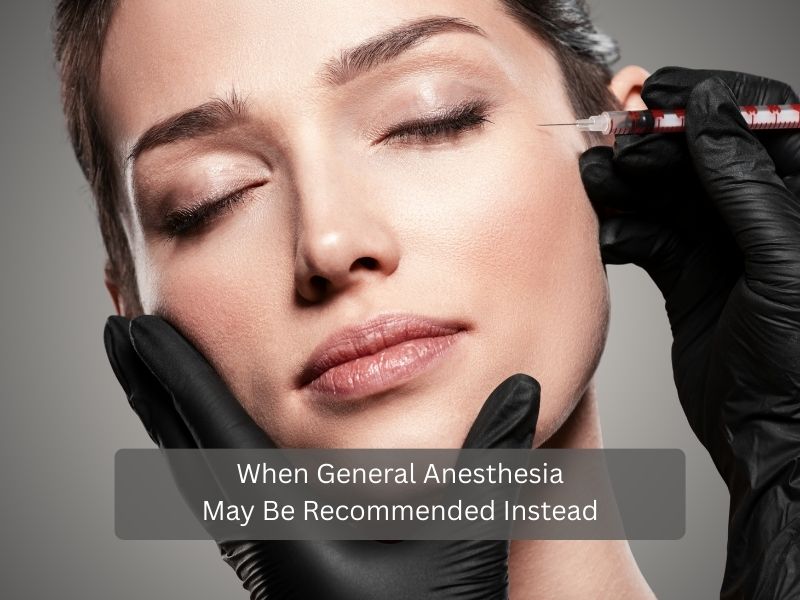
Although local anesthesia for lower blepharoplasty works well for many patients, some situations require deeper anesthesia.
Combined Facial Procedures
When lower blephararoplasty is performed with procedures such as:
- brow lift
- laser resurfacing
- facial tightening procedures
- surgery on the upper eyelids
the surgeon may suggest general anesthesia.
Patient Preference and Surgical Complexity
Some patients prefer sleeping during surgery, and that preference is important.
Also, when the procedure involves deeper work on facial structures, general anesthesia may provide a safer operating environment.
FAQs
Is lower blepharoplasty painful with local anesthesia?
For most patients, lower blepharoplasty surgery causes very little pain once the local anesthesia injection takes effect. The surgical site becomes fully numb, so patients typically feel pressure or movement rather than discomfort. Mild soreness can appear after the procedure, but it usually fades within a few days during recovery.
How long does lower eyelid surgery with local anesthesia take?
A typical lower eyelid blepharoplasty performed with local anesthesia lasts about two hours, although timing can vary. The length depends on several factors, including how much excess eyelid skin must be removed and whether fat pads need repositioning. Additional cosmetic procedures may extend the overall surgical time.
Is local anesthesia safer than general anesthesia for blepharoplasty?
For many people, local anesthesia may reduce certain anesthesia risks because the medication is limited to the surgical site. That said, the safest option depends on the patient’s medical history, the complexity of the surgery, and the surgeon’s recommendation. A detailed consultation helps determine the best approach.
Will lower blepharoplasty remove under-eye bags?
Yes, lower blepharoplasty specifically targets under eye bags, puffiness, and excess lower eyelid skin. During the procedure, the surgeon adjusts fat pads and tightens the surrounding skin to create a smoother contour. This often leads to a more rested appearance.
When will I see results after lower eyelid surgery?
Improvements in appearance become visible as swelling and bruising gradually fade. Many patients notice changes within the first one to two weeks, though final results from lower blepharoplasty surgery can take several weeks as the skin continues to heal.
Learn More About Blepharoplasty During a Consultation
If drooping eyelids, under-eye bags, or loose skin around the eyes concern you, blepharoplasty may help improve both appearance and comfort. At San Diego Plastic Surgery Center – Dr. Jose Rodriguez, consultations allow patients to review treatment options and receive expert guidance from an experienced plastic surgeon.
Schedule your consultation today to find out if eyelid surgery is right for you.