

If you are researching are you put to sleep for eyelid surgery (blepharoplasty), you are not alone. Anesthesia is one of the most common concerns blepharoplasty patients have before moving forward with treatment. The short answer is that some patients are put to sleep, while others stay awake, and the right option depends on several personal and surgical factors.
Understanding how anesthesia options work for eyelid surgery helps you feel more prepared, reduces anxiety, and allows you to have a more productive consultation with your surgeon. During your visit with Dr. Jose Rodriguez, these options are reviewed based on your anatomy, comfort level, and treatment plan. Below, we explain how anesthesia is chosen, what you may feel during the procedure, and how recovery can vary from patient to patient.
Are You Put to Sleep for Blepharoplasty (Eyelid Surgery)?

It depends on the type of anesthesia
Not every blepharoplasty surgery requires you to be fully unconscious. In fact, most patients are not completely asleep. Many procedures are performed using local anesthesia alone or local anesthesia with sedation, also known as IV sedation or mild sedation.
However, in some cases, especially when combining upper and lower eyelids or adding other procedures, general anesthesia may be recommended. This means you are completely put to sleep for the surgery.
Why anesthesia choice varies by patient
There is no one-size-fits-all approach. The best anesthesia choice depends on factors such as:
- Whether the upper eyelid, lower eyelid, or upper and lower eyelids are being treated
- The amount of excess skin, extra skin, or excess fat to be removed
- Your medical history, including medications and prior reactions to anesthesia
- Anxiety level and comfort with staying awake
- Whether the surgical procedure involves only the upper lids or includes deeper structures like muscle
- If the surgery is combined with a brow lift or another plastic surgery treatment
For many patients, anesthesia decisions change once these details are reviewed carefully.
Types of Anesthesia Used for Eyelid Surgery
Local anesthesia only
With local anesthesia, a local anesthesia injection is used to numb the surgical site. You remain awake but should not feel pain. This option is commonly used for upper blepharoplasty when the goal is to remove excess skin causing droopy upper eyelids or affecting peripheral vision.
You may feel:
- Pressure or gentle movement
- A pulling sensation near the lash line
- Temporary numb feeling around the eyelids
This approach allows faster discharge from the recovery room and avoids the side effects of deeper sedation.
Local anesthesia with sedation
Many patients choose local anesthesia with sedation, often called IV sedation. In this case, the local anesthetic numbs the area while medications help you relax or lightly sleep.
Patients often describe this as:
- Feeling calm and drowsy
- Being aware but not anxious
- Having little memory of the procedure
This option is popular for lower eyelid surgery and for patients who want more comfort but do not need general anesthesia.
General anesthesia (being fully asleep)
With general anesthesia, you are completely put to sleep and fully unconscious. This may be recommended when:
- Treating upper and lower eyelids together
- Performing lower blepharoplasty involving deeper muscle or fat repositioning
- Combining an eyelid lift with a brow lift or other treatment
While safe for healthy patients, general anesthesia requires more monitoring and usually a longer stay in the recovery room.
Upper vs Lower Eyelid Surgery and Anesthesia
Anesthesia for upper eyelid surgery
Upper eyelid surgery typically addresses droopy eyelids, sagging skin, and extra skin that can affect vision or appearance. Because this area is superficial, local anesthesia—with or without mild sedation—is often sufficient.
In many cases, patients stay awake and comfortable for the entire two hours or less that the procedure takes.
Anesthesia for lower eyelid surgery
Lower eyelid surgery often treats excess fat, fine wrinkles, and changes in the lower lid that contribute to a tired appearance. Because this area can be more sensitive, local anesthesia with sedation is commonly used.
In some patients, especially those needing more extensive correction, general anesthesia may be recommended.
When both upper and lower lids are treated
When upper and lower eyelids are treated together, anesthesia choice often shifts. While some surgeons still use local anesthesia with IV sedation, others prefer general anesthesia for comfort and safety.
This decision depends on the length of the surgical procedure, patient anxiety, and whether other procedures are added.
What Does It Feel Like During Eyelid Surgery?
If you are awake, you should not feel sharp pain. The local anesthesia injection may cause brief stinging, followed by numbness. During surgery, you may notice:
- Pressure around the eyelids
- Sounds from instruments
- Occasional blurry vision or light sensitivity
Patients who receive sedation often feel as though the procedure passes very quickly.
Who Is a Good Candidate for Staying Awake?
You may be a good candidate for staying awake if you:
- Are having upper blepharoplasty only
- Are comfortable with medical procedures
- Have no major anxiety about surgery
- Have a stable medical history
- Are not combining multiple treatments
However, for patients with significant anxiety or complex surgical plans, deeper sedation may be better.
Safety of Anesthesia for Eyelid Surgery
Eyelid procedures are among the most common and safest plastic surgery treatments when performed by a qualified surgeon. All anesthesia options are considered safe when properly selected.
Before surgery, your doctor will review:
- Current medications
- Past reactions to anesthesia
- Heart, lung, and neurological health
- Lifestyle factors such as smoking
This evaluation helps reduce risks and ensure the safest approach.
Is it safe to be awake during eyelid surgery?
Yes, it is safe for many patients to remain awake during eyelid surgery. Local anesthesia has been used safely for decades and allows precise adjustments, especially when addressing natural creases and eyelid symmetry.
However, this changes when surgery becomes longer or more complex. In those cases, deeper sedation may improve comfort and safety.
Risks of sedation vs general anesthesia
All forms of anesthesia carry some risks, though serious complications are rare.
Potential risks of sedation include:
- Nausea
- Drowsiness
- Temporary low blood pressure
Potential risks of general anesthesia include:
- Longer recovery time
- Sore throat
- Increased fatigue
Your surgeon and anesthesia team balance these risks against surgical needs.
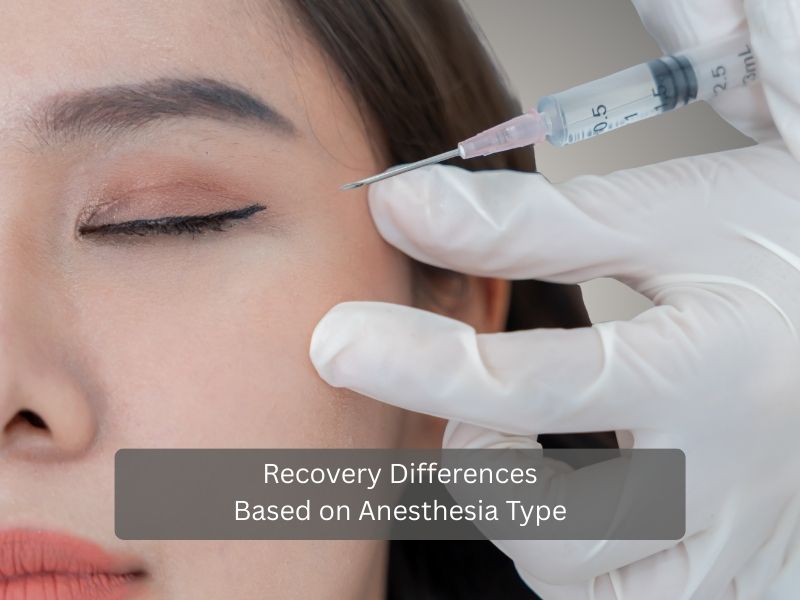
Recovery Differences Based on Anesthesia Type
Recovery after local anesthesia
With local anesthesia, recovery is often quicker. Patients usually go home within a few hours and experience:
- Mild swelling and bruising
- Watery eyes or light sensitivity
- Temporary blurry vision
Most patients return to normal activities in about a week, following aftercare instructions such as using cold compresses.
Recovery after general anesthesia
Recovery after general anesthesia may involve:
- Longer time in the recovery room
- Grogginess for the rest of the day
- Slower return to daily activities
The overall healing process is similar, but the first 24 hours can feel more intense.
Frequently Asked Questions
Are you put to sleep for eyelid surgery every time?
No. Most patients are not fully asleep. Many blepharoplasty patients undergo eyelid surgery using local anesthesia or local anesthesia with sedation, especially for upper eyelid procedures.
Does Insurance Cover Eyelid Surgery?
Insurance may cover eyelid surgery (blepharoplasty) if it is considered medically necessary rather than cosmetic.
Functional eyelid surgery is sometimes covered when excess upper eyelid skin (dermatochalasis) interferes with your vision, causes documented visual field obstruction, or leads to chronic irritation, rashes, or difficulty keeping your eyes open.
Does lower eyelid surgery require general anesthesia?
Not always. Lower eyelid surgery can be performed with IV sedation and local anesthetic. However, general anesthesia may be recommended for more complex cases or when combined with other procedures.
Will I feel pain if I am awake during surgery?
You should not feel sharp pain. The area is numbed with a local anesthesia injection, and most patients only feel pressure or movement at the surgical site.
How long does eyelid surgery take?
Most procedures last between one and two hours, depending on whether the upper, lower, or upper and lower eyelids are treated.
Does anesthesia affect recovery time?
Yes. Patients who receive local anesthesia often recover faster than those who have general anesthesia, though overall results and appearance are similar.
Can anesthesia choice affect results?
Indirectly, yes. Comfort during surgery allows the surgeon to work precisely, which supports better outcomes and a more youthful appearance.
Take the First Step Toward a More Defined Chin
If you are considering chin liposuction to reduce stubborn fullness under the chin, a personalized consultation is the best place to start. At San Diego Plastic Surgery Center, Dr. Jose Rodriguez evaluates your facial structure, skin quality, and aesthetic goals to determine whether chin liposuction is the right option for you.
Contact us today to schedule your consultation and learn what results may be possible.
